
The Evolution of European Welding Training From Single-Process Machines to Digital Teaching Platforms
How broader process coverage, transparent controls, traceable data and robot compatibility are changing equipment decisions in European welding education.
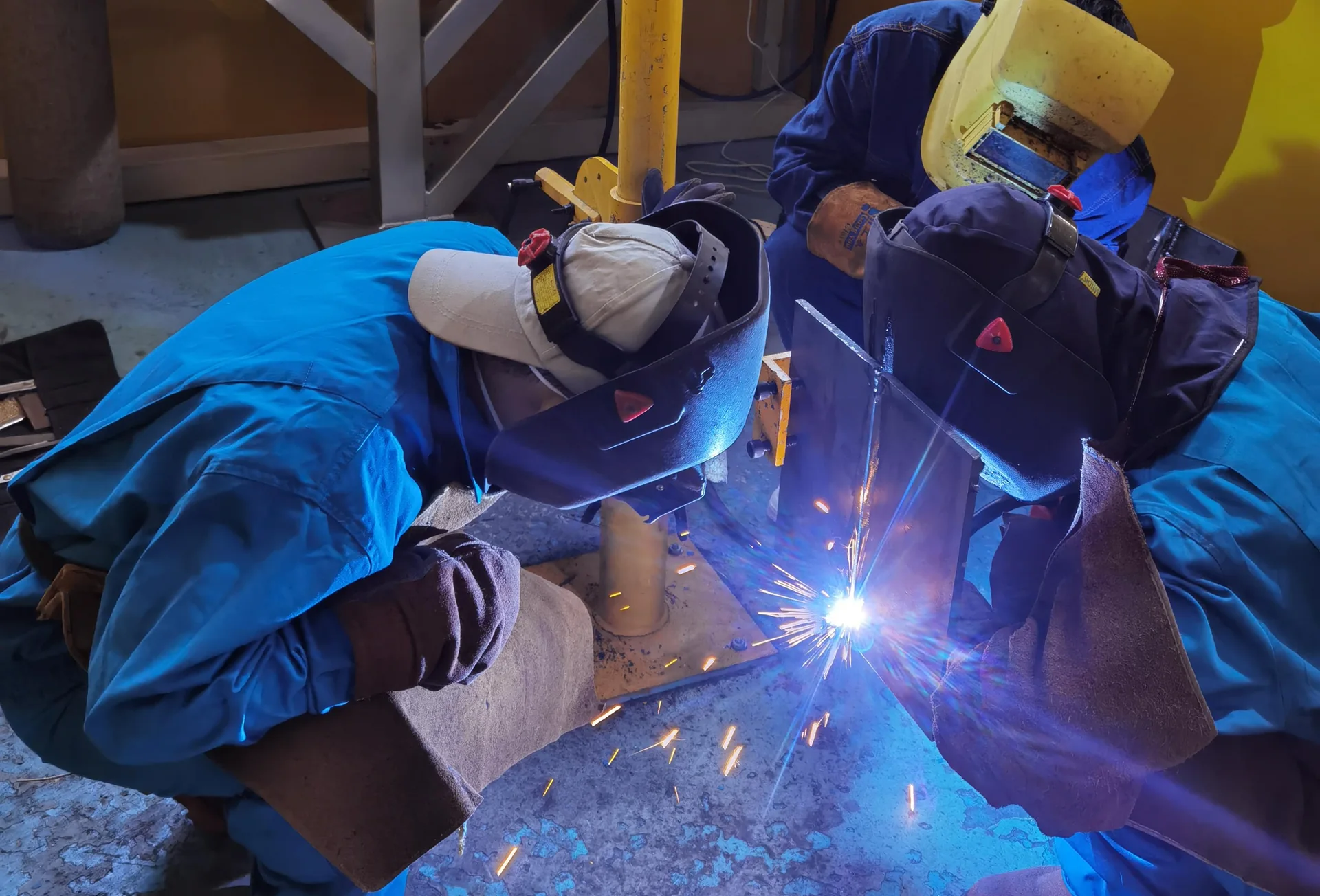
European welding training combines theory, supervised practice and qualification testing. ISO 9606-1 sets requirements for qualification testing of welders working with steels, while training providers organize courses around individual processes such as manual metal arc, MAG and TIG welding.
That structure places practical demands on training equipment. A teaching platform must do more than produce a weld: it must let students understand setup choices, repeat exercises and work across the materials and processes included in the curriculum.
Process Coverage Defines the Teaching Possibilities
European course catalogs commonly separate process 111 manual metal arc welding, process 135 MAG welding and process 141 TIG welding. Introductory programs may also expose students to MIG, autogenous welding and plasma cutting.
For schools that teach aluminum TIG, AC capability and non-contact HF arc starting matter. Adjustable AC controls help instructors demonstrate the relationship between oxide cleaning, penetration and heat input. A machine limited to DC or Lift TIG cannot cover the same aluminum exercises.
Plasma cutting can also support workshop preparation and fabrication modules. When welding and cutting are available on one teaching platform, a school can reduce equipment changes between exercises, but only if each process meets the required teaching standard.
Gas Management Affects Workshop Time
MIG/MAG, TIG and plasma cutting use different shielding gases or compressed air. Frequent hose and cylinder changes consume lesson time and create another setup step that students and instructors must check.
Dedicated gas connections can make a multi-process teaching station easier to manage. The benefit is greatest in workshops that switch processes repeatedly during the same class or training cycle.
Interfaces Must Explain Rather Than Hide the Process
Students need to learn why current, voltage and wire-feed speed change a weld. Synergic programs can shorten initial setup, but the interface should still expose the parameters and allow instructors to demonstrate cause and effect.
A touchscreen can show process state, menus and saved settings clearly. Physical knobs remain useful for direct adjustment while wearing gloves and for teaching familiar welding workflows. Combining both approaches gives beginners guidance without removing control from advanced students.
Training Equipment Is Becoming a Data Node
Digital training platforms can support three emerging requirements:
- Traceable welding records. Logged parameters can help instructors review how a student configured and completed an exercise, rather than relying only on the final bead appearance.
- Connected teaching environments. Wireless connectivity can simplify firmware updates, parameter transfer and future integration with workshop-management systems.
- Automation readiness. Robot or cobot compatibility lets a school introduce automated welding concepts without separating manual and robotic process education completely.
A Practical Selection Framework
Training institutions can evaluate a multi-process platform across four questions: Does it cover the processes and materials in the curriculum? Can students see and adjust the parameters they are expected to understand? Can the workshop switch processes efficiently? Does the platform leave room for data recording and automation modules?
The NEXA ULTRA AC/DC Series is one option for programs that need HF AC/DC TIG, Double Pulse MIG, Stick and plasma cutting on a shared platform. Its 7-inch touchscreen and physical knobs are designed to balance guided setup with direct adjustment. Wireless connectivity, generator compatibility and a four-gear wire drive extend the platform beyond a basic single-process teaching machine.
This does not make one platform the right answer for every school. Institutions focused on a single process may prefer dedicated equipment. The value of a consolidated platform is strongest where the curriculum genuinely requires broad process coverage and repeated switching.