
Solutions
Robotic Welding Solutions
Plan an automated welding application from the workpiece outward. Material, joint access, part dimensions and changeovers guide the choice of process, robot structure and installation.
Match the process to the part
Welding power, robot reach and production layout answer different questions. Review them together before choosing a complete configuration.
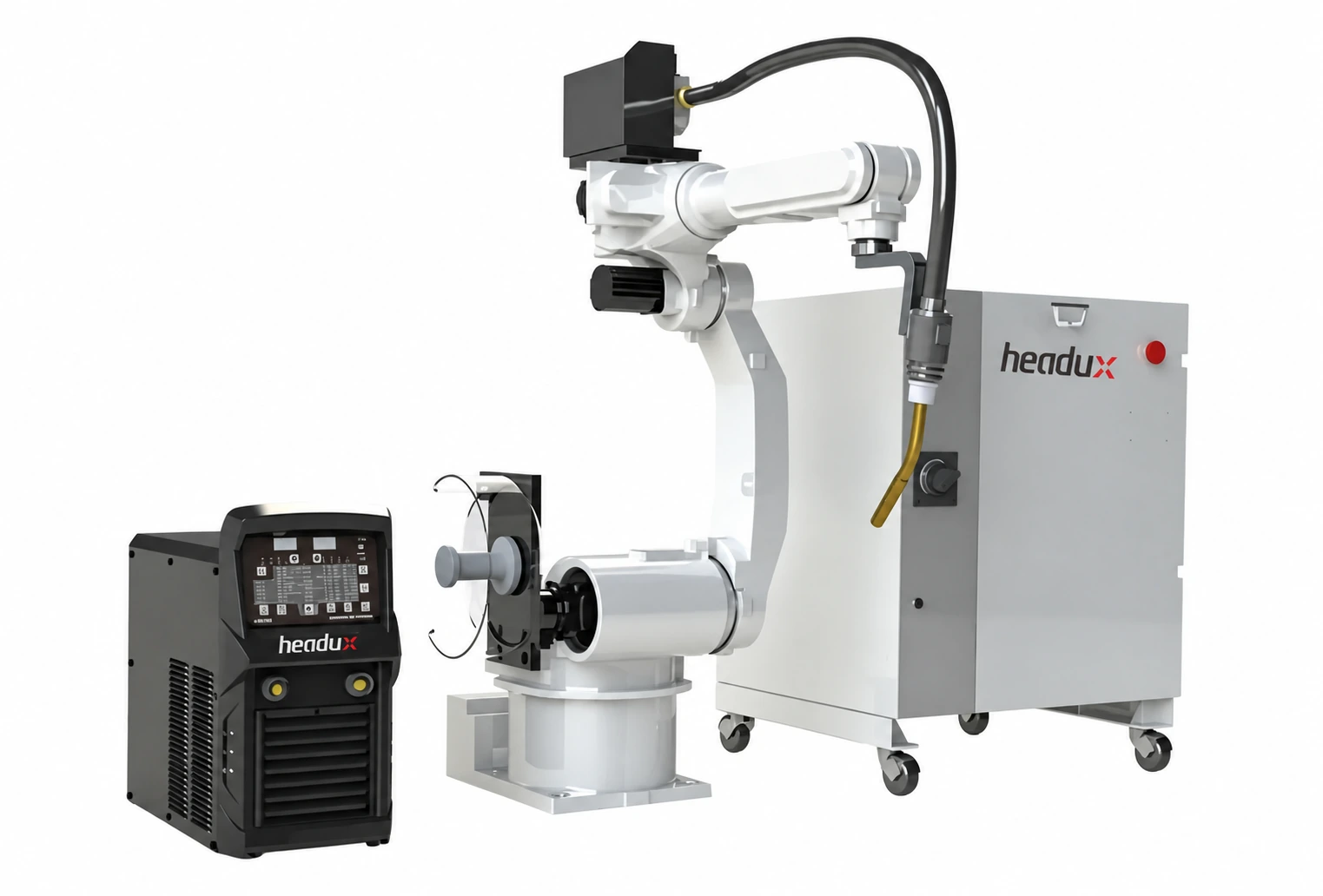
Arc Welding Applications
Compare the published thin-sheet and medium-thick plate configurations. Discuss base material, joint preparation, wire selection and the required weld sequence.
Explore Arc Welding Robots →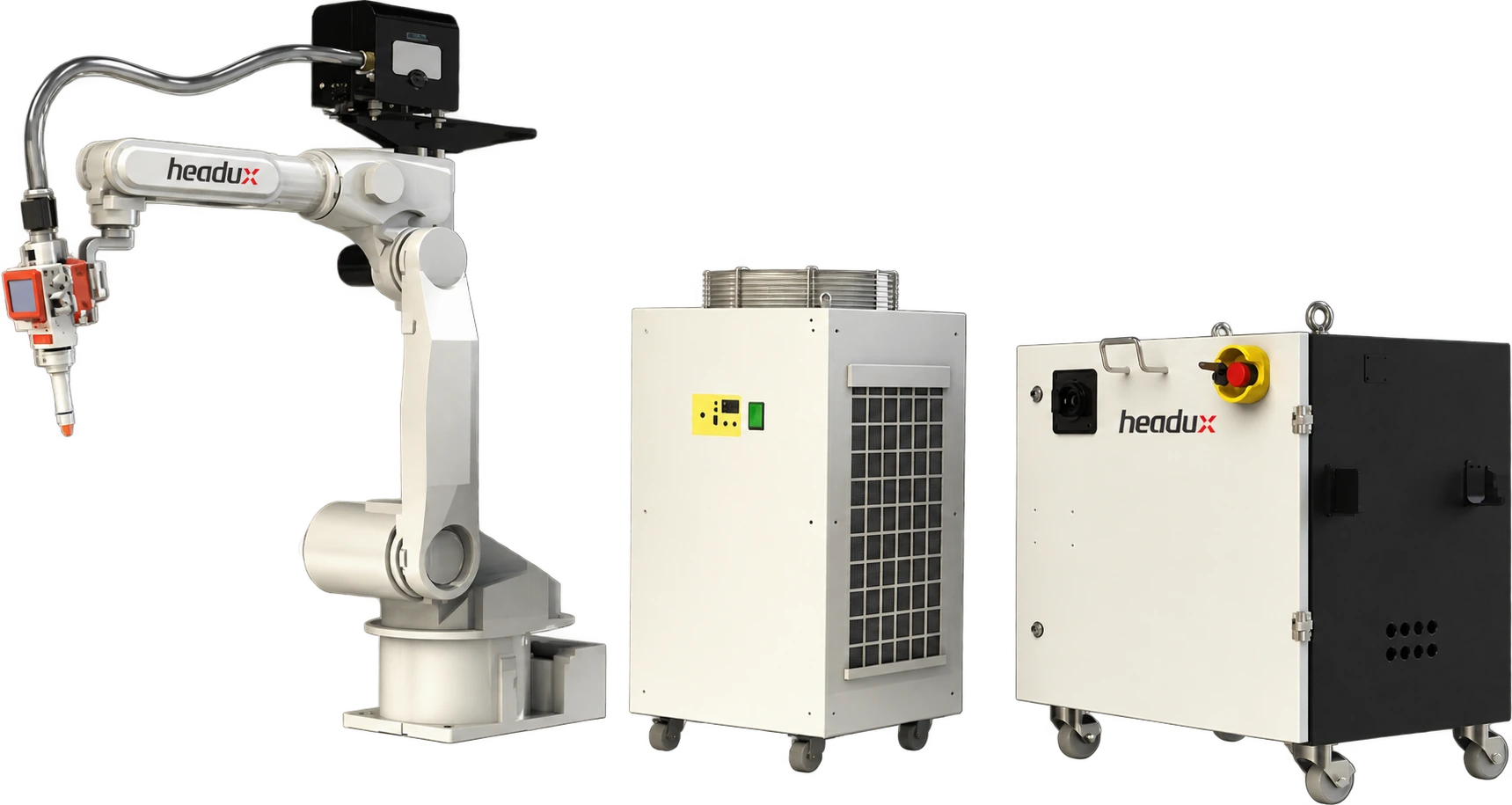
Laser Welding Applications
Compare the 1500 W and 2000 W laser configurations, material options and welding-head features. Review joint fit-up, access and the installation requirements for your process.
Explore Laser Welding Robots →Select a mechanical arrangement
For structural components, compare the robot's arrangement with the dimensions and access requirements of the workpiece.
Floor-mounted: F-Series
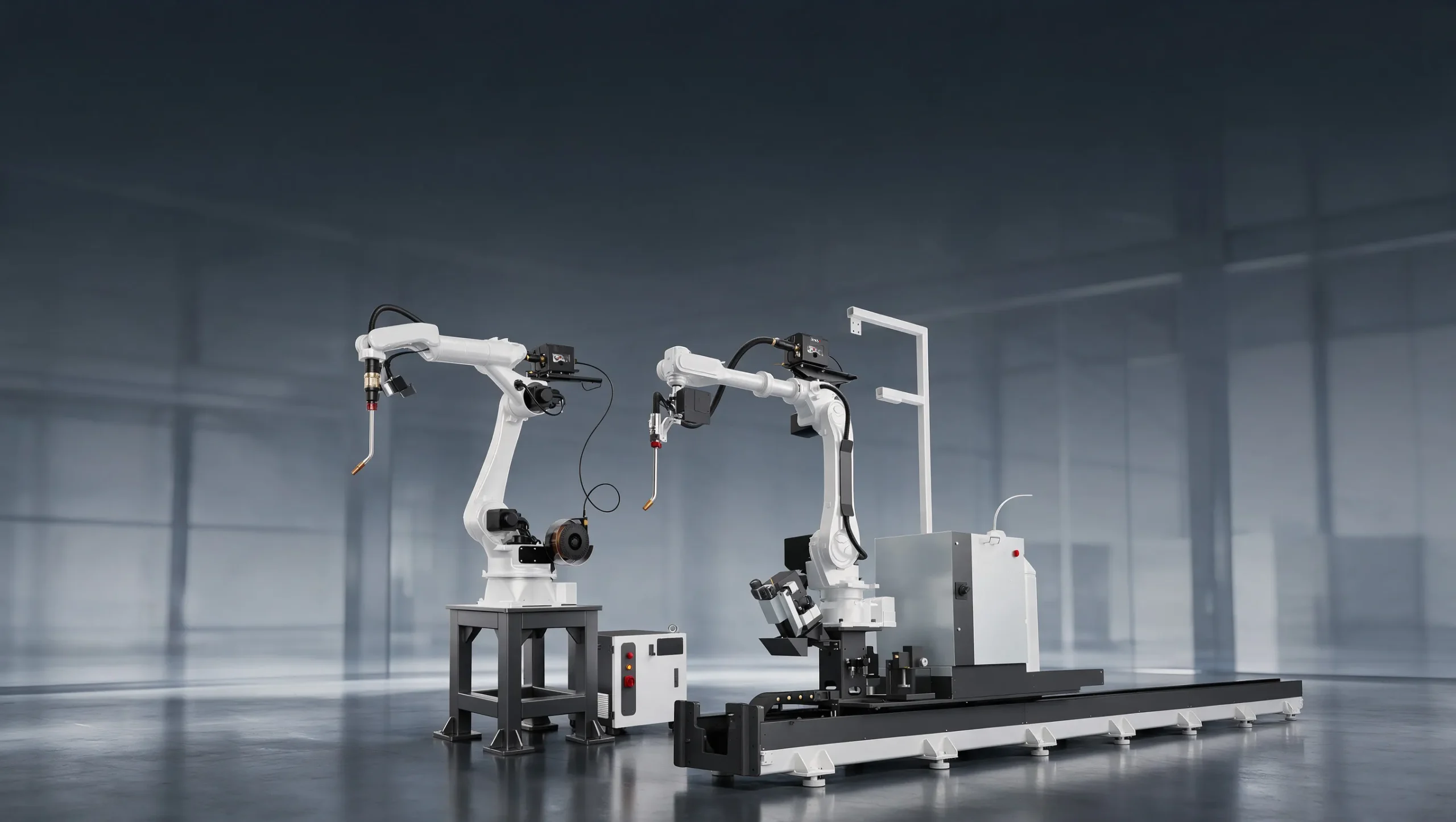
An upright robot arrangement with a coordinated-rail configuration. Consider the working area, part positioning and access along the weld.
View F-Series →Cantilever: C-Series
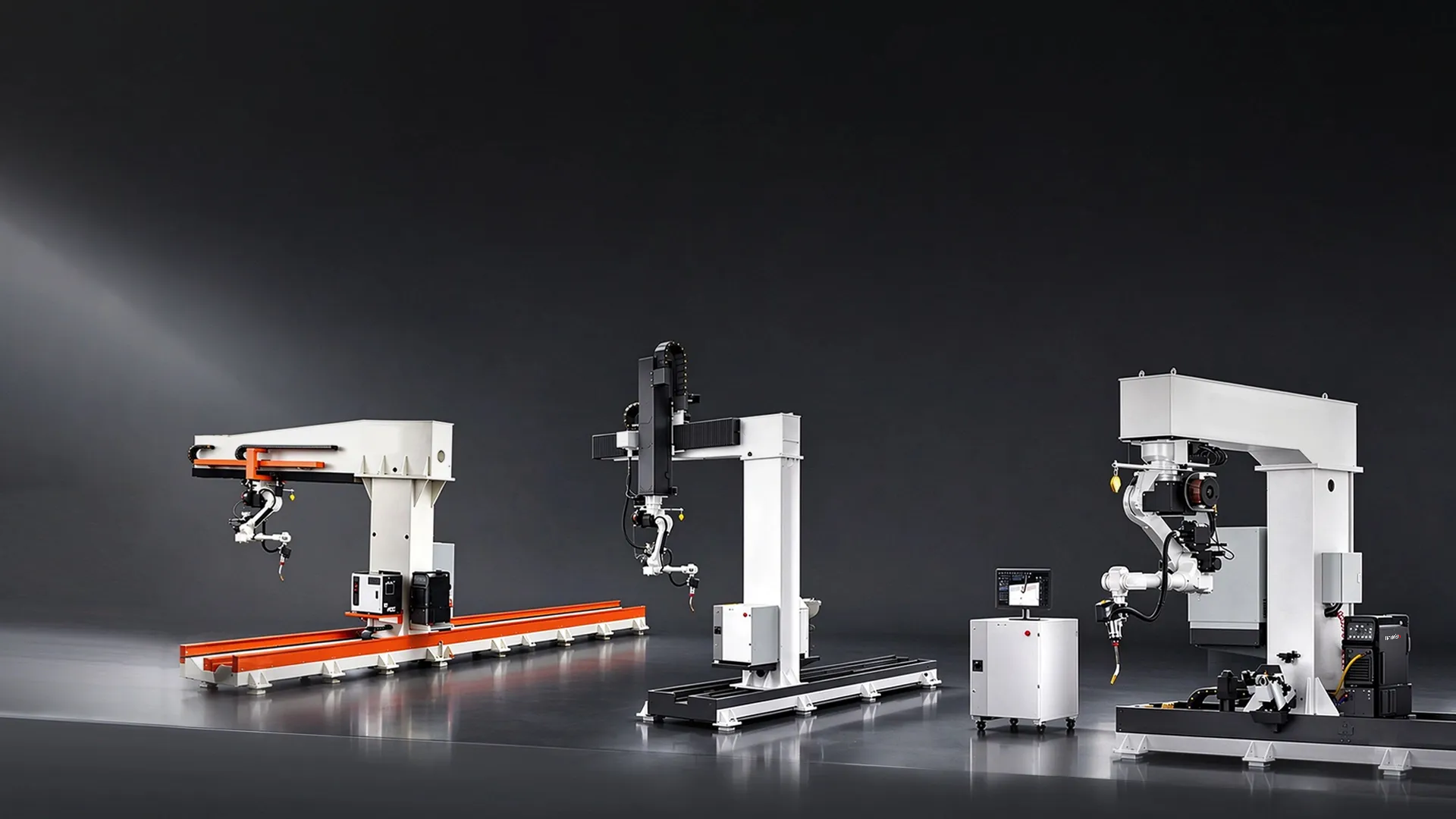
Compare 7-, 8- and 9-axis configurations for access around long or wide structures. Confirm the exact envelope against the proposed configuration.
View C-Series →Gantry: G-Series
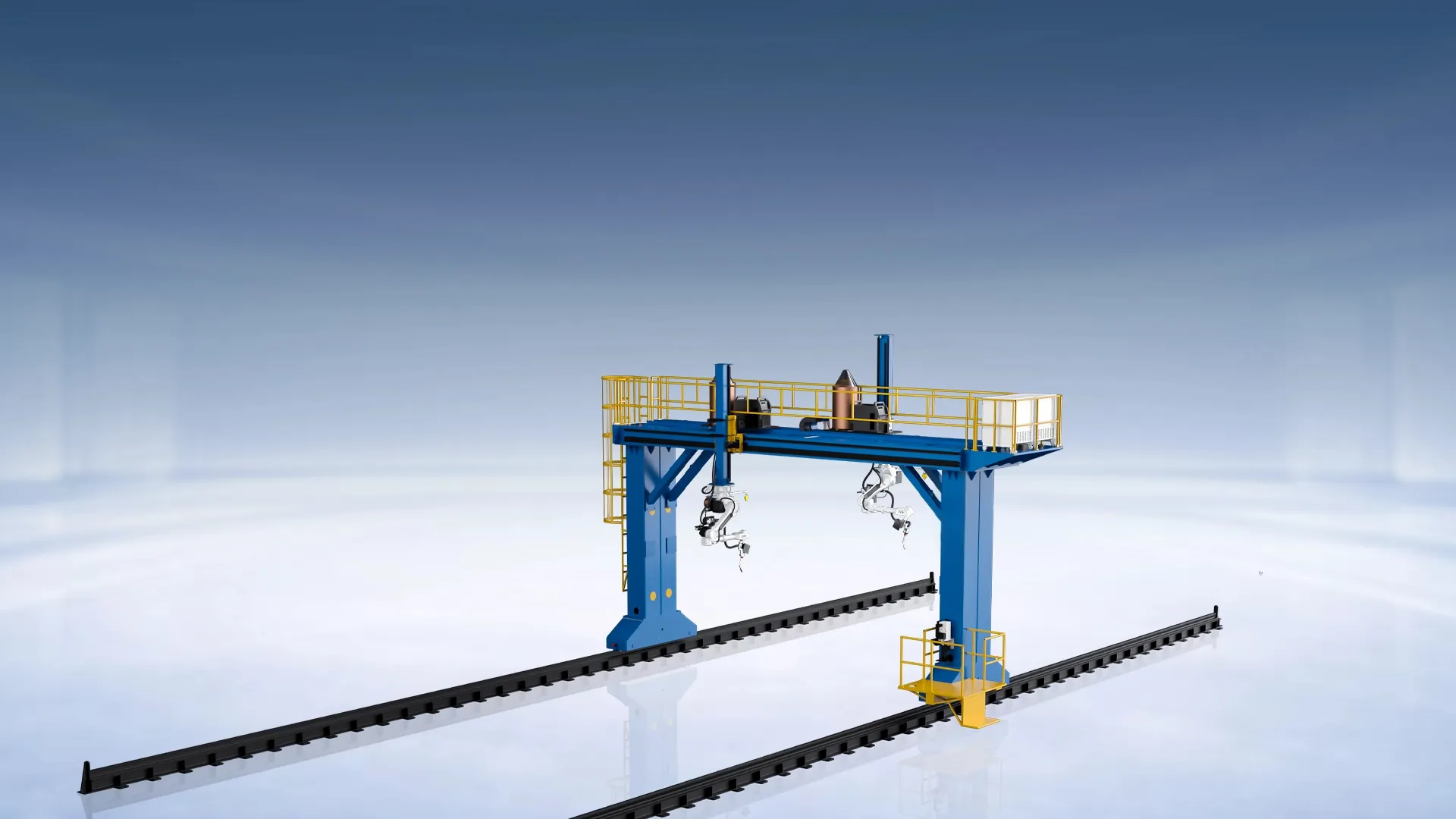
A nine-axis gantry arrangement for large structural components. Work-area dimensions are defined around the installation and part requirements.
View G-Series →Application areas to assess
Steel structures and fabrication
Review long welds, repeated joints, part loading and how the fixture holds the assembly throughout the welding sequence.
Shipbuilding and bridge components
Assess component size, access to internal joints and travel along the workpiece when choosing cantilever or gantry coverage.
Machinery and heavy components
Review joint geometry, changes between part types and the required welding procedure before selecting the robot and process configuration.
Prepare an application review
Share representative drawings or samples with the Headux team to discuss the configuration.
What information is useful for selecting a welding robot?
Provide the material and thickness, part dimensions and weight, joint drawings, welding requirements, available floor area and expected production mix. These details help distinguish process requirements from mechanical reach and handling requirements.
How do Physical AI and collaborative systems differ?
The Physical AI range groups the F-, C- and G-Series robot structures with workpiece perception, planning and execution capabilities. Collaborative systems are a separate range. Select either approach against the application and its installation requirements.
Can I compare power sources separately from robots?
Yes. The Robotic Welding Machines category retains the TitanMig power-source range, while Welding Robots and Physical AI Robots describe process packages and robot configurations. Confirm the interface and integration requirements for a proposed combination.